Easy Ways How To Measure Website Traffic in 2026
- April 10, 2026
- Miguel Umbac
- 11:36 pm
You can measure website traffic by using tracking codes or by looking at your server logs. These methods show you how many people visit your site and what they do once they arrive.
TL;DR
Measuring traffic is the only way to know if your marketing works. We use tools like Google Analytics to see our own data. We use tools like Semrush to guess what competitors are doing. You must track more than just hits. You need to track users, where they come from, and if they turn into customers.
This guide covers technical ways to collect data, the best tools to use, and a quick daily workflow. We focus on real results rather than big numbers that do not mean anything.
Two Ways To See Your Data
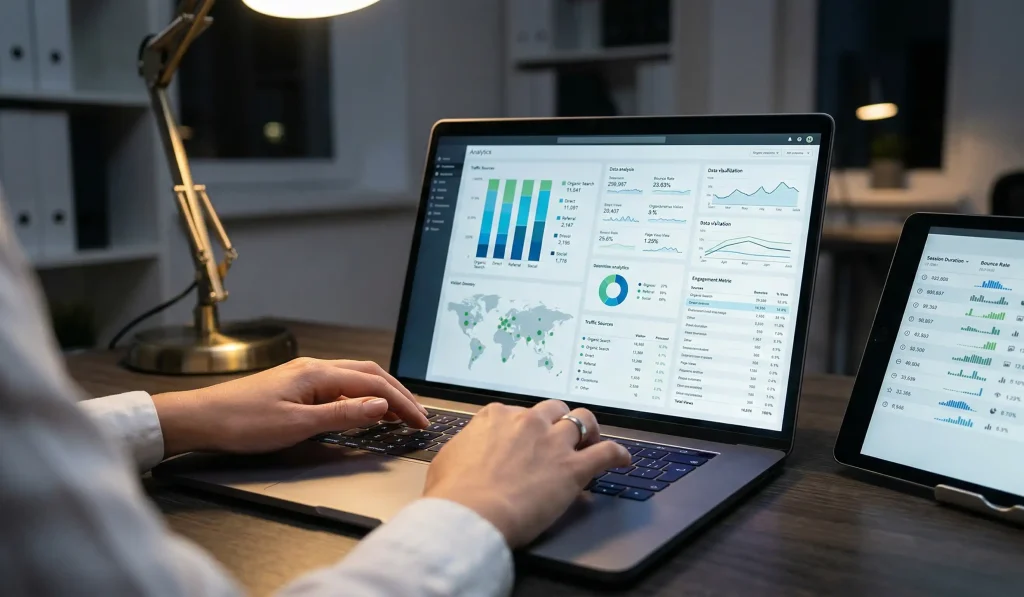
We look at data in two main categories. The first is data from your own website. This is called first-party data. It is very accurate because you own the site and the tracking tools. You can see exactly which buttons people click and how long they stay. Understanding your own numbers is the first step when you learn how to measure website traffic effectively.
The second category is data from other websites. This is called third-party data. You cannot see the inside of a competitor account. Instead, you use tools that make a smart guess. These tools look at patterns across the internet to estimate how much traffic a rival gets. This helps you see where you can win more customers in your local area.
Both types of data are important. Your own data tells you how to improve your site. Competitor data tells you where you stand in the market. I always tell my clients to focus on their own growth first. We build sites that are ready to track this data from day one. Our web design and development services focus on making sure your tracking codes load fast.
Methods For Collecting Traffic Information
There are three ways to get this information. Most people only know about one. If you want to know how to measure website traffic like a pro, you need to understand the technical side.
Page Tagging
This is the most common way. We put a small piece of code called JavaScript on every page. When a person loads your site, the code sends a message to a server. This is how Google Analytics works. It is great for seeing how people move through your pages. Most modern websites use this as their primary source of truth.
Server Logs
Every time someone visits your site, your web server writes it down in a file. This is a log. It happens automatically. It catches things that JavaScript might miss. For example, it tracks search engine bots and people who use ad blockers. Over my 3.5 years of technical focus, I have found that logs are the most honest record of server activity. This is a vital part of how to measure website traffic if you want to see the full picture.
Hybrid Tracking
The best way is to use both. We use JavaScript for the details and logs for the big picture. This gives us a complete view of your traffic. It ensures we do not miss data because of technical glitches. This is how we ensure your site is performing at its best for Core Web Vitals.
Essential Metrics You Need To Track
Do not get distracted by big numbers. You need to look at specific metrics that lead to money. When people ask how to measure website traffic, they often think a “hit” is the only thing that matters. That is not true.
- Users and Unique Visitors: This tells you how many actual people came to the site.
- Sessions: This is the number of visits. One person might visit three times in one week.
- Traffic Channels: This shows where people found you. They might come from Google Search or a social media link.
- Bounce Rate: This shows if people leave right away. A high bounce rate means your content might not be what they wanted.
Tracking these numbers helps you see which parts of your marketing spend are working. This is why our local SEO services focus on high-quality traffic rather than just large numbers.
Advanced Tracking With The Data Layer
We go beyond simple page views. We use something called a Data Layer. This is a layer of information that sits under your website. It helps us track very specific actions without breaking the website code. Knowing how to measure website traffic through a Data Layer is a game changer for small businesses.
We use this to track lead forms. When a customer fills out a form, the Data Layer tells us exactly which page they were on. We also track clicks on your phone number or email address. This is part of our Build Rank Cite Automate framework. We want to know exactly what makes a visitor take action.
By tracking these events, we can see where people get stuck. If many people start a form but do not finish it, we know the form is too long. This data helps us make your site better for users. We use this information to feed into our AI and workflow automation services. This ensures no lead is left behind.
Best Tools For The Job
You do not need many tools. You just need the right ones. Using too many tools can slow down your site and confuse your team.
Google Analytics is the best tool for seeing what happens on your site. It is free and very powerful. For seeing how you show up in search results, we use Google Search Console. It shows us which words people type to find you. This tool is essential for anyone learning how to measure website traffic from organic search.
To look at your competitors, we use tools like Semrush or Ahrefs. These tools help us see which pages on their site are popular. We also use Similarweb to see where their traffic comes from globally. I use these tools to find gaps in your market. These estimates are not perfect, but they show the direction of the market.
A Simple 15 Minute Traffic Workflow
You do not need to spend all day looking at charts. Follow this simple plan to stay on top of your growth.
First, check your total users for the last month. Is the number going up or down? Second, look at your top pages. These are the pages people like most. See if those pages have a clear way for people to contact you. If they do not, you are missing out on revenue.
Third, look at your traffic sources. If you are paying for ads, make sure those visitors are actually staying on the site. Finally, compare your traffic to your leads. If traffic is up but leads are down, something is wrong. We focus on ROI. Every visitor should have the potential to become a customer. This is the heart of how to measure website traffic for real business results.
We often link these stats to a CRM using tools like n8n or Make. This lets us see exactly which click turned into a sale. This is how we provide affordable digital marketing for small businesses without the fluff. Using automation makes your data more useful. It turns a simple list of numbers into a clear plan for your business.
Legal Compliance and Data Privacy
In 2026, you must be careful with how you track people. You must follow laws like the GDPR and local privacy rules. This means you need a clear privacy policy on your site. You should also use a cookie banner that lets users choose if they want to be tracked.
We make sure your tracking setup is safe and legal. We do not collect personal names or addresses without permission. We focus on anonymous data that tells us about groups of people. This keeps your business safe while giving you the insights you need. Learning how to measure website traffic must always include learning how to do it safely.
Frequently Asked Questions
Why is my traffic data different in different tools?
Every tool counts traffic in a different way. Some tools ignore bots while others count them. Some tools miss users who have strict privacy settings. It is normal to see small differences between Google Analytics and your web host stats. The key is to look for trends rather than matching the exact numbers.
Can I see exactly who visited my website?
No. For privacy reasons, tools do not give you the names or addresses of visitors. You can see their general location and what device they used. You only get their name if they fill out a contact form on your site. This is a major part of how to measure website traffic legally.
How often should I check my website stats?
You should check your main numbers once a week. Looking every day can be confusing because traffic goes up and down naturally. A weekly check helps you see real trends. You should do a deep dive once a month. This keeps you focused on long term growth.
Is bot traffic included in my visitor count?
Most modern tools like Google Analytics try to filter out bots. However, some traffic from search engines or crawlers might still show up. Your server logs will show all of this activity. This is why checking both helps you understand how to measure website traffic accurately.
Does website speed affect my traffic data?
Yes. If your site is very slow, the tracking code might not load before the user leaves. This means you will miss that visitor in your data. High performance sites have more accurate tracking because the scripts load instantly.
Get A Technical Audit
I will look at your site and show you how to track your growth correctly.
Article by
Miguel Umbac
Miguel Umbac is an SEO Specialist & Web Developer and the founder of Built by Miguel. With over 3.5 years of experience in SEO and 9 years in technical support, he focuses on building high-speed, SEO-first websites that rank. Miguel specializes in “Local Domination” engines that help businesses win the Google Map Pack. He also integrates AI and workflow automations using tools like n8n and GoHighLevel to handle lead follow-ups,